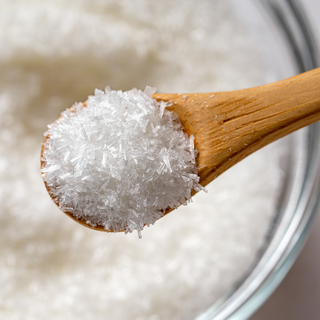
MSG is widely known for the savory taste it brings to food. However, its potential extends beyond the kitchen, with research exploring its possible applications in areas ranging from animal feed to paper industry.
Several studies have examined how MSG may be used beyond its primary role as a flavor enhancer. These findings offer industries an opportunity to better understand MSG and explore its potential across different applications.
What Is MSG?
MSG, or monosodium glutamate, is an ingredient known for enhancing umami, often described as a savory taste. Glutamate is also naturally present in foods such as tomatoes and cheese.
In the food industry, MSG helps create richer, more balanced flavors. This makes it a widely used ingredient in products such as seasonings, sauces, instant noodles, snacks, and other processed foods.
From Food to Other Industries
MSG is best known for enhancing flavor in food. But its potential goes beyond the kitchen. Researchers are also exploring its possible uses in areas such as animal nutrition, paper industry, agriculture, and other industrial applications.
These areas offer opportunities to learn more about MSG and how it could be used beyond its traditional role as a flavor enhancer.
Food Industry: Enhancing Flavor
Great food is about more than just saltiness. The balance of flavors plays a big role in how a product tastes and how much consumers enjoy it. This is where MSG comes in, helping bring out savory notes and create a fuller flavor profile across a wide range of products, from seasonings and sauces to snacks and ready-to-eat meals.
MSG can also play a role in developing foods with less sodium. In a study published in the National Library of Medicine, researchers tested reduced-salt versions of four dishes with added MSG. The results showed that the MSG versions were just as well liked as the regular-salt versions, and in some cases, even more preferred.
For food manufacturers, this highlights how MSG can do more than enhance flavor. It can also offer flexibility when refining recipes and developing products that meet changing consumer preferences.
Animal Feed: Improving Feed Palatability
Getting animals to eat enough feed is an important part of animal farming. But not all feed ingredients are equally appealing, especially when lower-quality or less palatable materials are used. Finding ways to improve feed acceptance can therefore be valuable.
Research on sheep has explored whether MSG could make these feed ingredients more appealing. In one study, adding MSG increased the intake of certain straw-based diets, suggesting that it may help improve the palatability of feed materials that animals would otherwise consume less readily.
This opens an interesting area for further exploration in animal nutrition: how MSG might contribute to feed formulations, particularly when working with less palatable ingredients.
Agriculture: Exploring MSG as a Fertilizer Additive
MSG is best known for its role in food, but researchers have also explored its potential use in agriculture, particularly as an additive in fertilizers. Studies have looked at how MSG may support the growth of different crops and vegetables, both on its own and when combined with existing fertilizers.
One study on pak choi, for example, looked at combining MSG with NPK fertilizer. The results showed improved growth in some measurements at certain application rates.
Other studies on corn and eggplant have also explored the potential of MSG to support plant growth. While research is still developing, these findings offer an interesting starting point for exploring how MSG could be used as part of fertilizer formulations.
Paper Industry: Exploring Better Water Resistance
In the paper industry, water resistance is an important feature, especially for products that need to withstand moisture. One material used to improve water resistance is alkyl ketene dimer (AKD), which helps make paper less absorbent.
Interestingly, research has also explored the use of MSG in developing AKD emulsions. A 2017 study published in the Journal of Dispersion Science and Technology found that using MSG-modified laponite particles resulted in smaller emulsion droplets, better storage stability, and improved sizing efficiency.
These findings highlight a potential role for MSG in developing materials used in paper manufacturing, particularly in improving emulsion stability and supporting the production of water-resistant paper.
MSG 40 Mesh for Industrial Applications
Choosing the right raw materials is an important part of food manufacturing. Each product has its own requirements, so the ingredients need to suit both the desired flavor and the production process. One option available from Bahtera Adi Jaya is MSG Mesh 40, supplied for use in the food industry.
MSG is a flavor enhancer that adds umami, or savory taste, to food. It is widely used in seasonings, instant noodles, broths, and instant soups.
MSG Mesh 40 features relatively coarse crystals with a 40-mesh particle size. This makes it a suitable option for formulations that call for visible crystals or a slower dissolution rate.
Beyond its product specifications, MSG Mesh 40 from Bahtera Adi Jaya offers several practical benefits:
- Local stock in Indonesia: Helps shorten lead times compared with direct imports.
- Technical documentation: Comes with a Certificate of Analysis (COA) and Material Safety Data Sheet (MSDS/SDS) for the relevant production batch.
- Formulation support: Bahtera Adi Jaya’s technical sales team can help address formulation needs and product-related questions.
The product is available in 25 kg packaging. For regular, high-volume orders, delivery schedules can also be arranged with the sales team.
Want to learn more about product specifications or availability? Visit the MSG Mesh 40 product page or contact the Bahtera Adi Jaya team to discuss your industrial raw material needs.
One Ingredient, Multiple Possibilities
MSG has long been an important ingredient in the food industry. However, research into its potential applications in animal feed and paper industry, as well as the use of byproducts from its production, shows that there is more to explore.
For businesses, understanding the broader potential of a raw material can be a starting point for identifying new opportunities and developing innovative applications.
With over 20 years of experience, more than 800 products and variants, over 50 suppliers, and more than 10,000 transactions, Bahtera Adi Jaya supports raw material needs across a range of industries. Find your solutions with Bahtera here.